
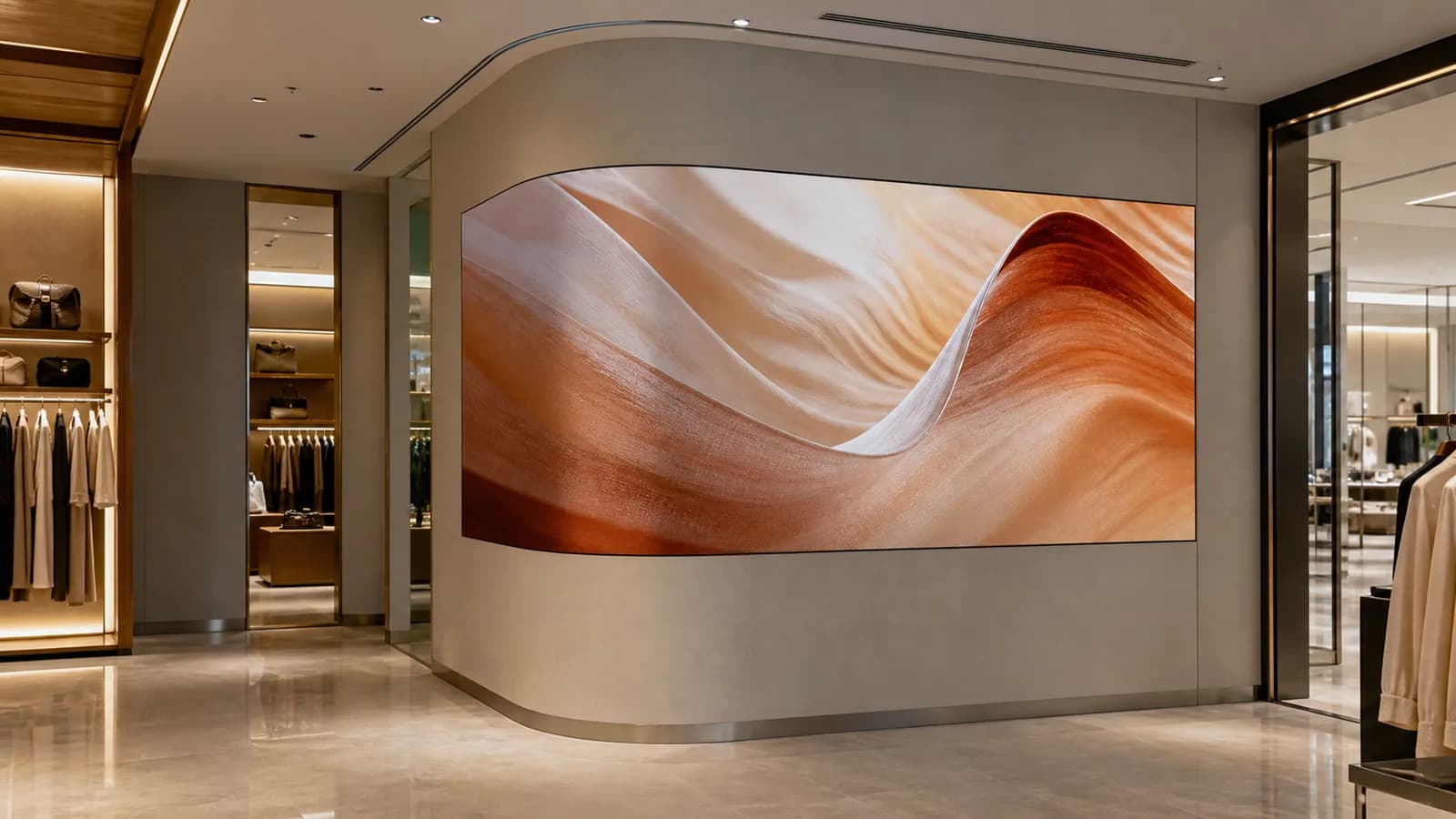
Fit
Does curved solve a real site problem?
We compare curved LED, ultrawide and flat alternatives so the display is chosen for visibility and customer movement, not novelty.
C9 GROUP helps you work out whether a curved LED wall, column wrap, corner return, ultrawide screen or standard commercial display is the right fit for the site.
We look at viewing distance, radius, cabinet depth, mounting access, service clearance, content zones and daily updates before we recommend a display path.
Supplier options from ViewSonic, Philips and Samsung are shortlisted around the site, budget and support model.
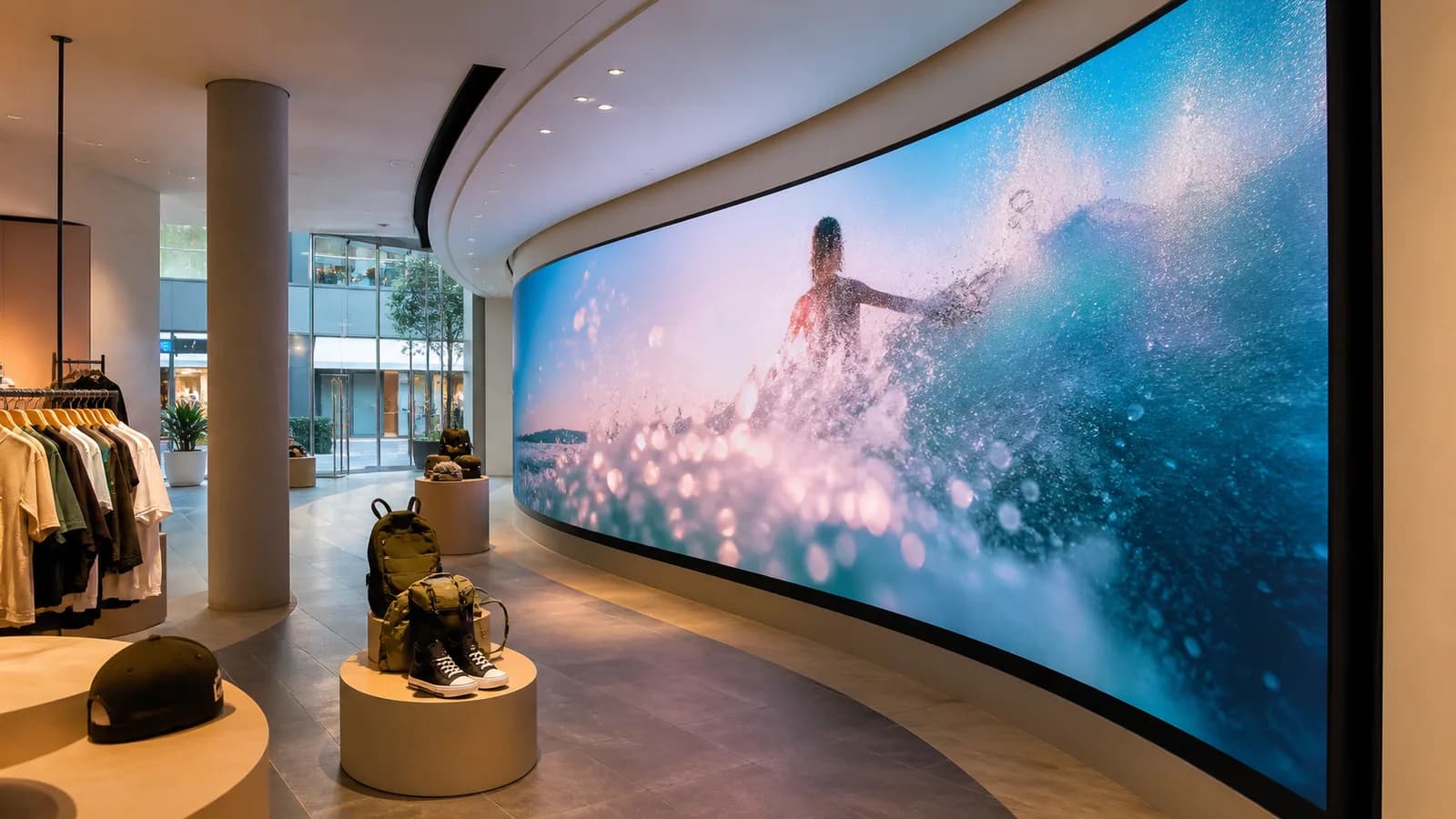
Curved display work gets expensive when the screen is chosen before the wall is understood. We start with the viewing path, the surface, the message and how close people will stand.
If a straight screen will do the job clearly, we will say so. If the architecture needs content to bend around a corner, column or feature wall, C9 plans the hardware and Lumina content workflow together.
C9 coordinates the display choice, supplier conversations, Lumina setup, installation readiness and support model so the finished screen is not hard to run.


Useful for retail feature zones, showrooms, lobbies, galleries and experience-led customer spaces.
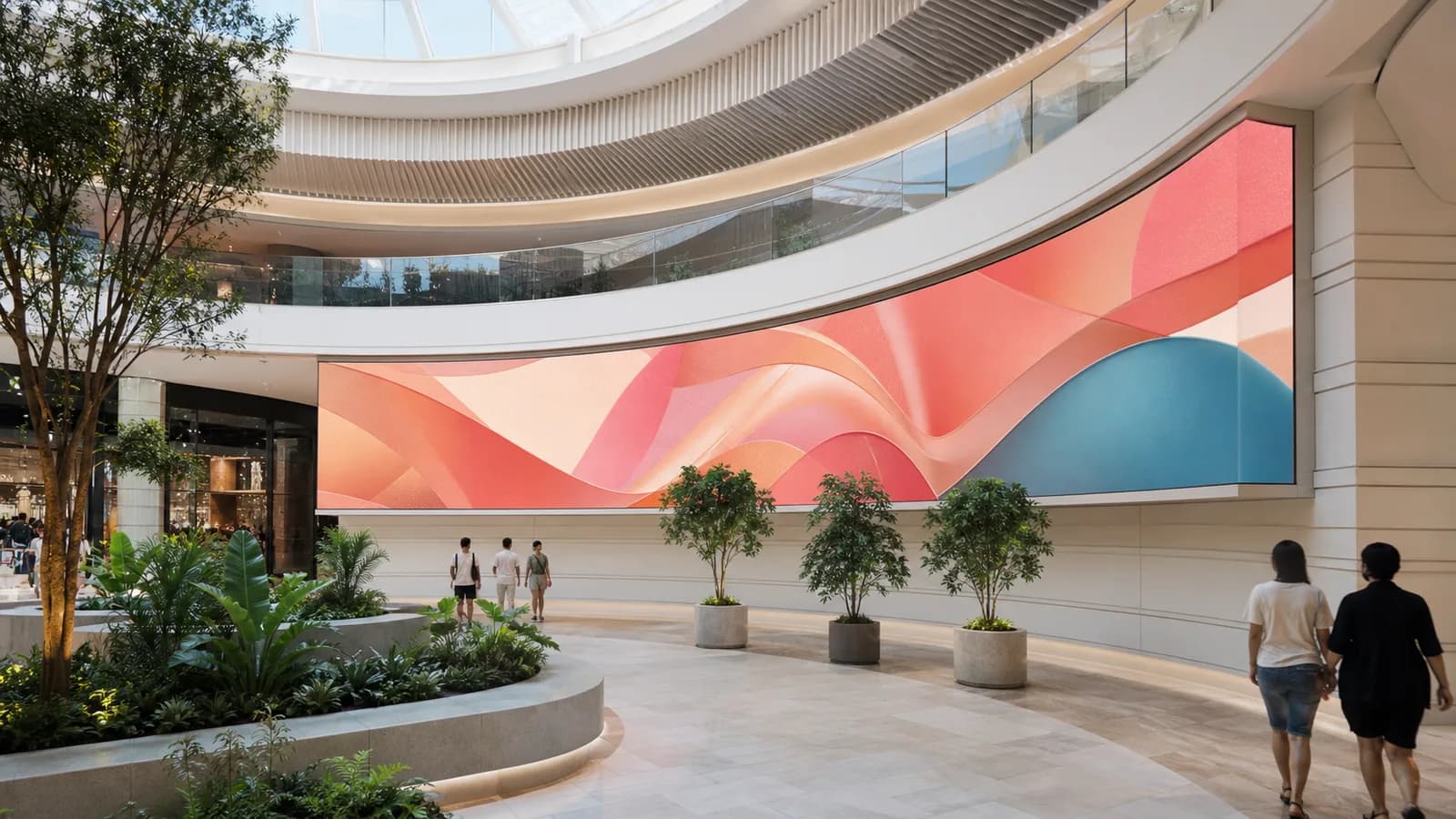
site-shaped LED
Custom to wall · Pixel pitch matched
architectural display
Project specific · Mapped LED content
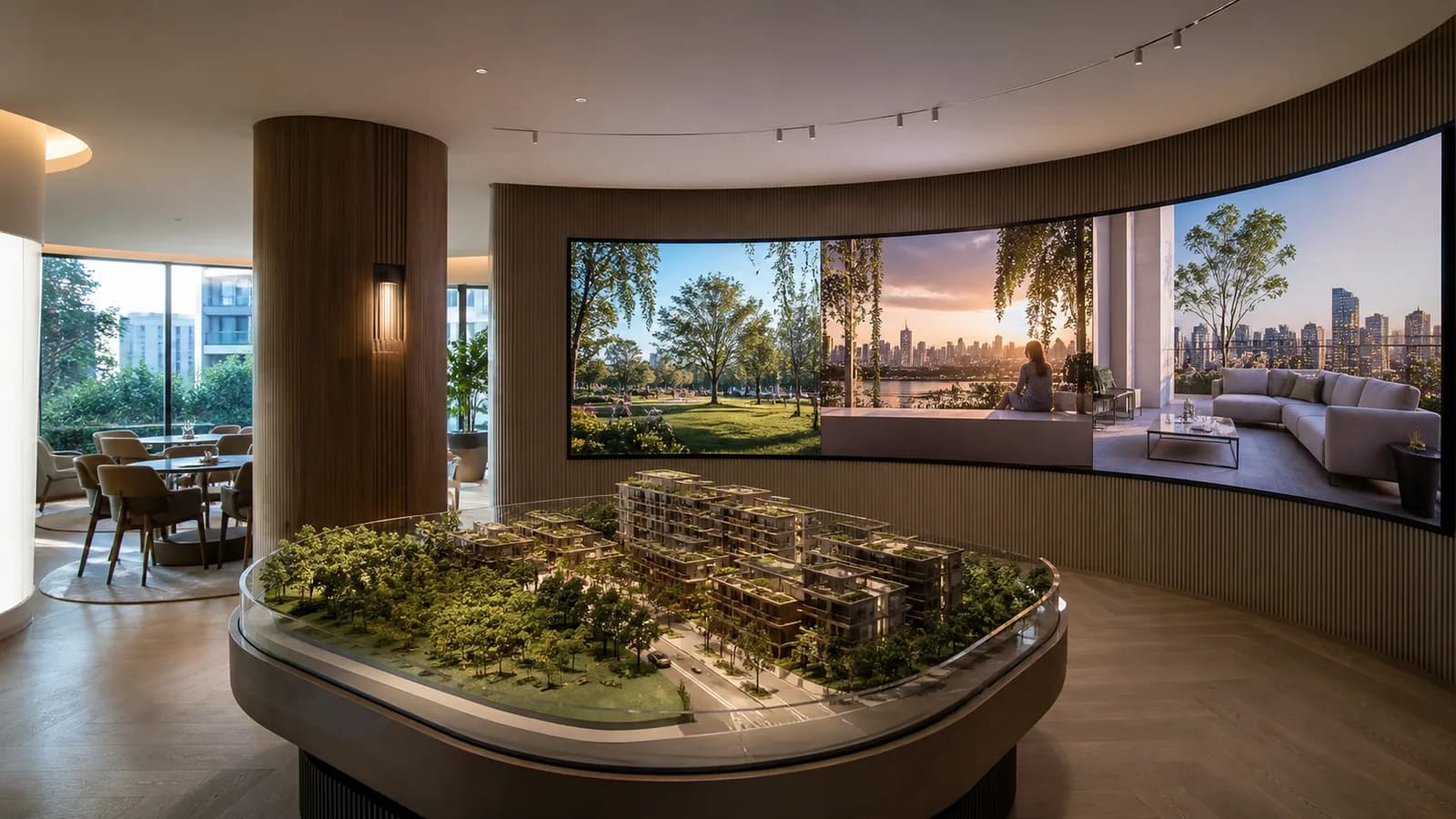
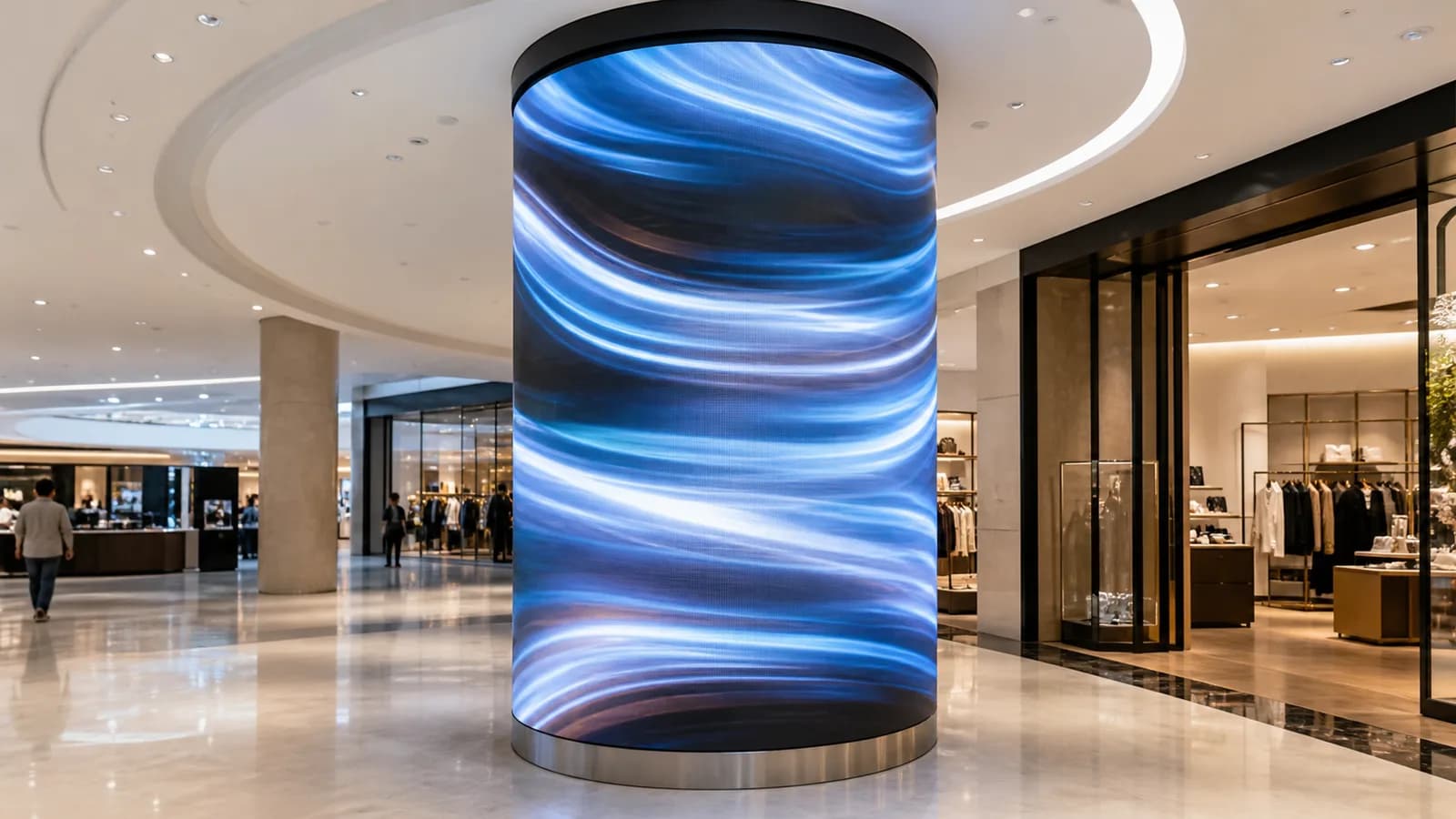
custom radius
Custom radius · Supplier matched
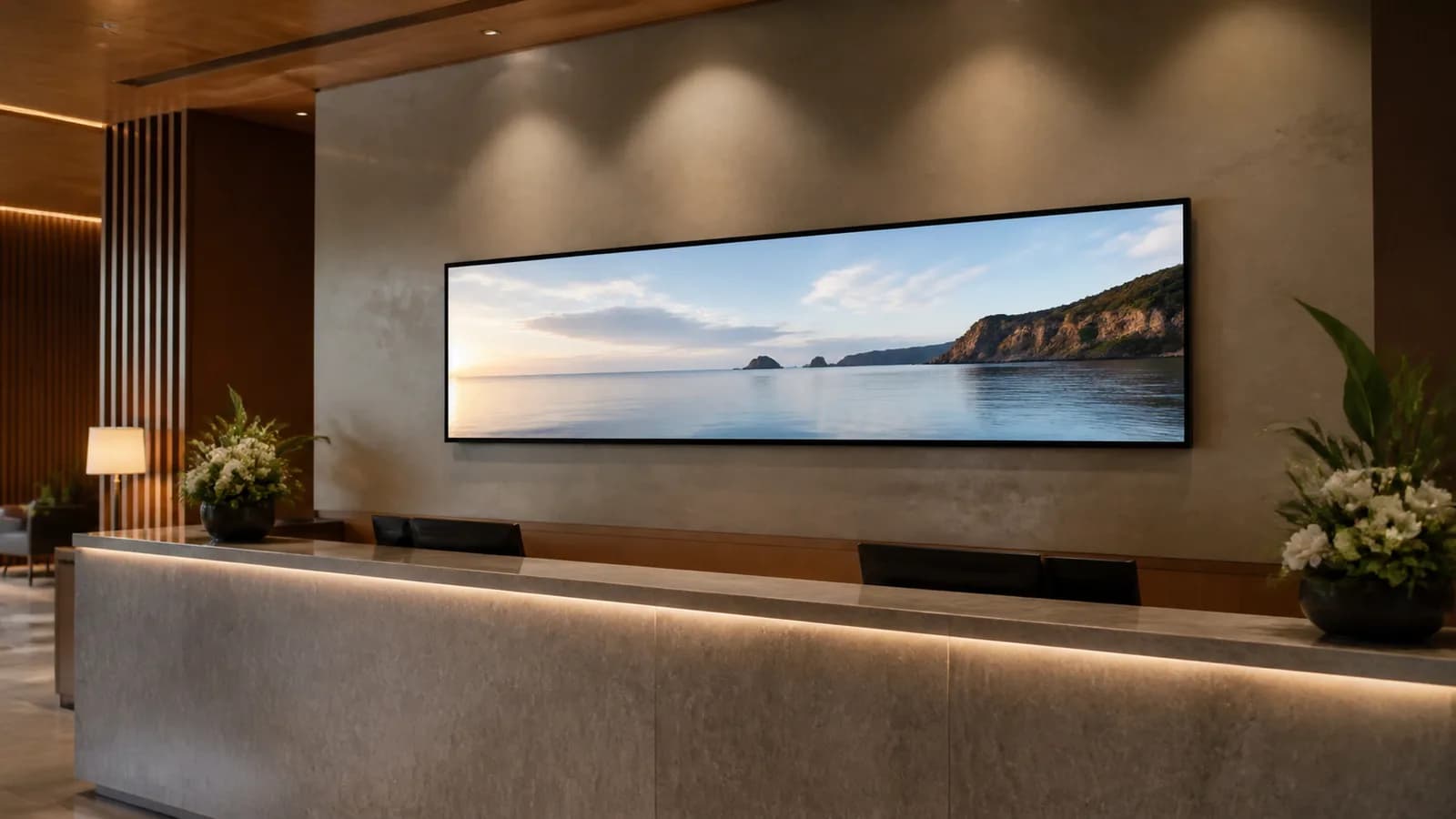
practical alternative
43 to 105 inch class · 4K to 5K class
A curved display should feel like it was planned with the building, not added at the end. The goal is a screen that customers can read, staff can update and installers can service without guesswork.
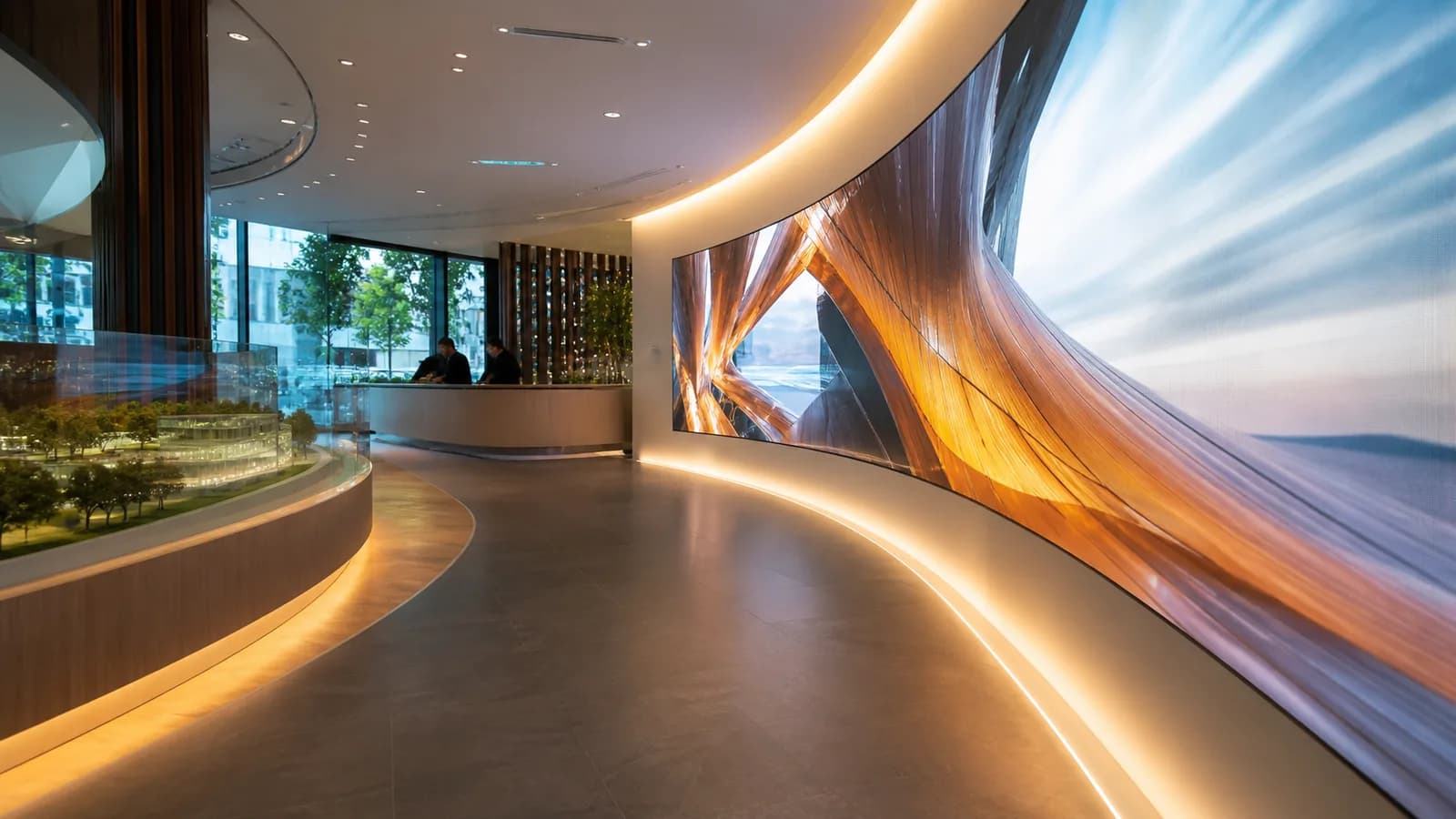
C9 compares curved, ultrawide and flat options first, so the recommendation is based on the room and the audience.
Pixel pitch and screen size are selected around how close people stand and what detail they need to read.
Lumina playlists and content zones are planned around the curved canvas so campaigns do not feel stretched or misplaced.
Access, controller placement, network readiness and escalation paths are considered before the display goes live.
Curved screens can look impressive, but the useful work happens before purchase: confirming that the shape solves a real site problem, that the supplier range can support it and that the team can run the content after launch.
Fit
We compare curved LED, ultrawide and flat alternatives so the display is chosen for visibility and customer movement, not novelty.
Specification
C9 checks cabinet layout, pixel pitch, control hardware, mounting and current supplier availability before the design is treated as ready.
Operation
Lumina workflows, publishing roles and escalation paths are planned before go-live so the display can be used week after week.
Curved display projects touch design, AV, construction, content and support. C9 keeps those pieces connected so the project does not become a loose handoff between suppliers.
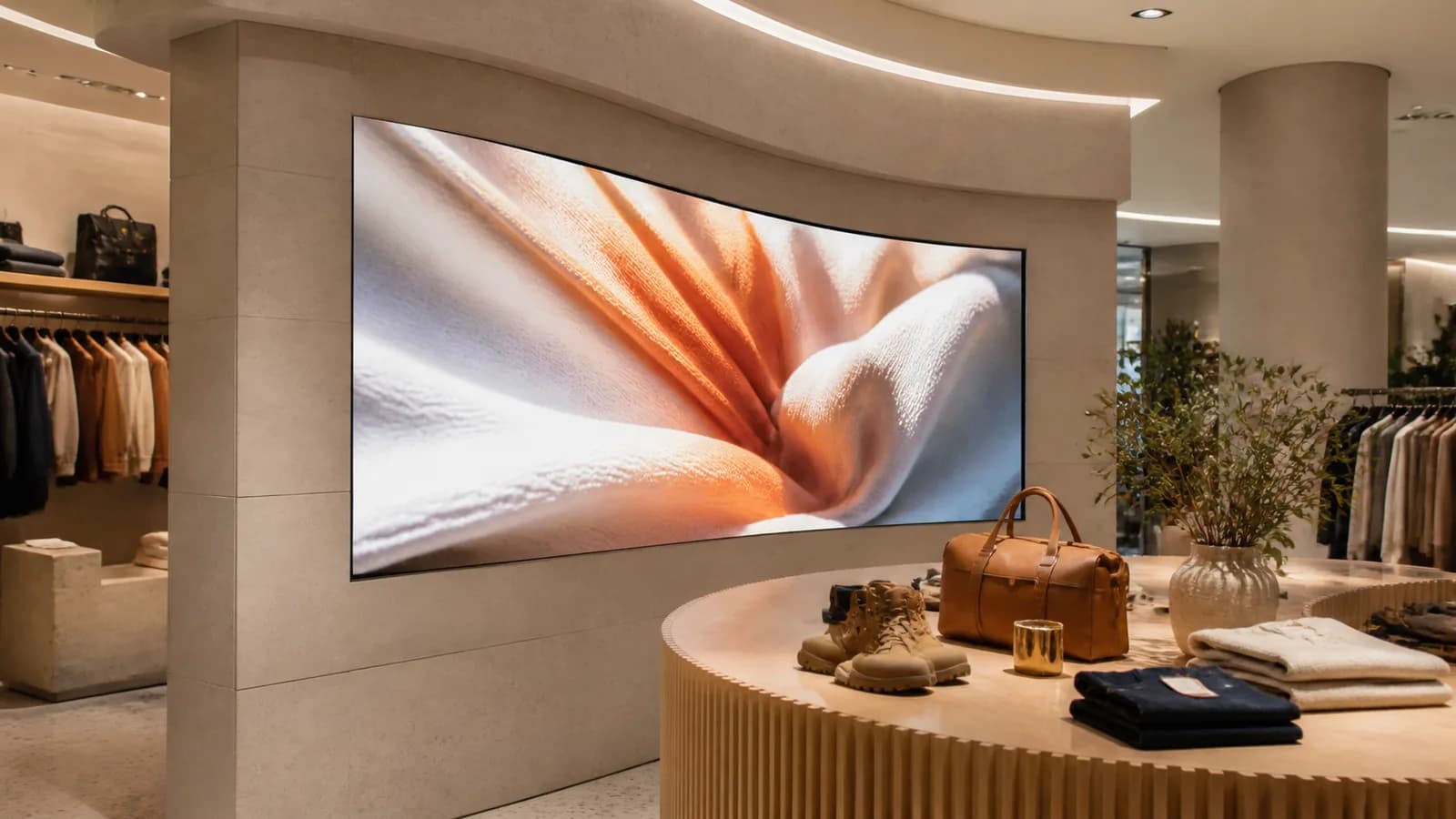
C9 shortlists commercial options from ViewSonic, Philips and Samsung around the site shape, viewing distance, availability and support needs.
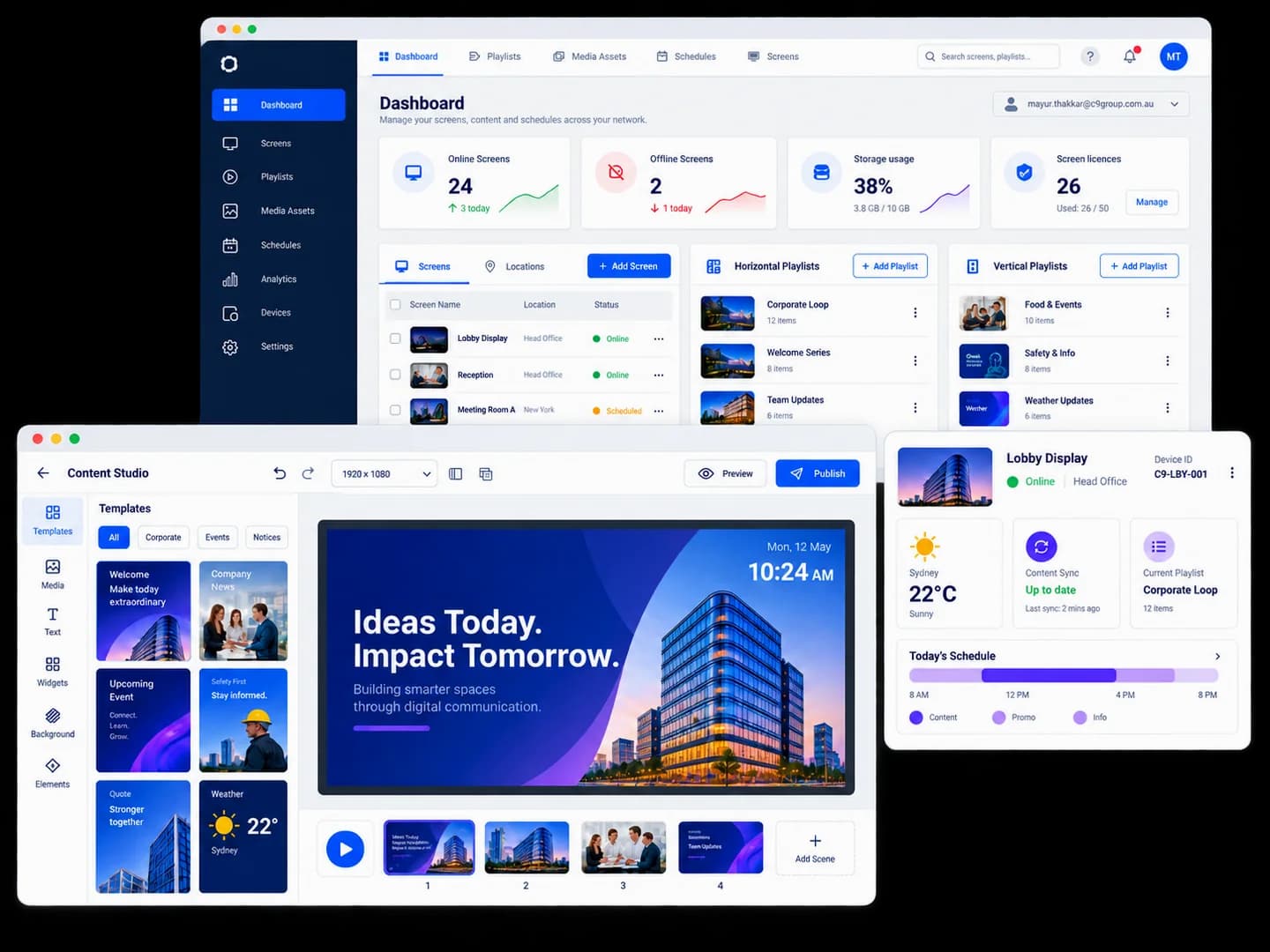
Campaign zones, playlists, publishing permissions and handover are planned around the actual canvas before the screen goes live.
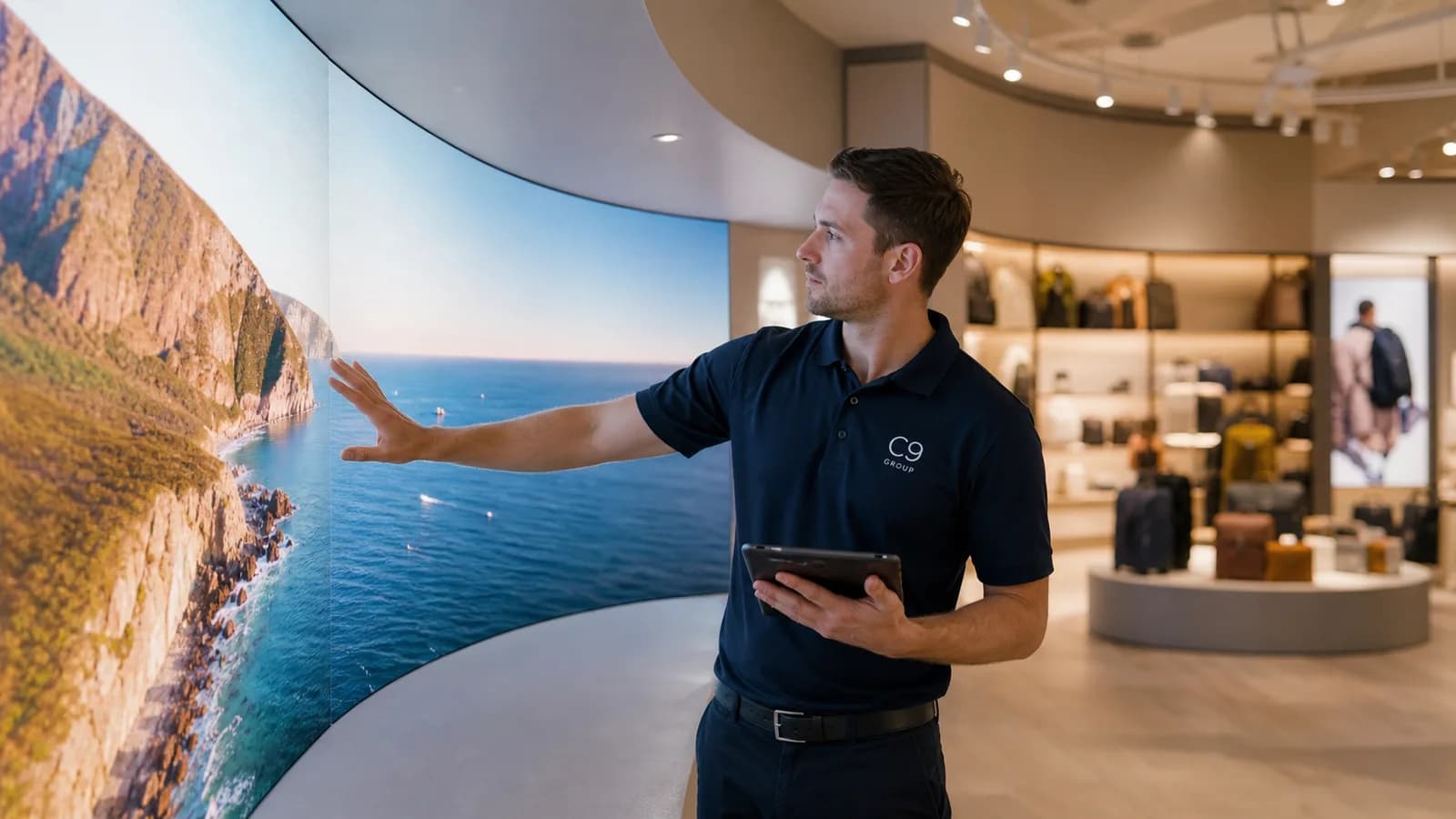
C9 coordinates site readiness, mounting, power, network access, install timing and support once the display is operating.
Your site does not need to be forced into one screen type. C9 compares configurable LED, architectural wraps, ultrawide screens and standard commercial displays from supplier ranges that can be supported properly.
site-shaped LED
For feature walls, lobbies and showrooms where the display needs to follow the room instead of sitting flat against it.
architectural display
For retail paths, galleries and customer areas where the message needs to turn a corner without feeling broken.
custom radius
For columns, curved joinery or built-in architectural moments that need a shaped digital surface.
practical alternative
For straight walls or tight budgets where a commercial display, LED wall or 21:9 screen gives a cleaner result.
Before quoting, C9 checks the site conditions that make or break a shaped display: where people stand, how the wall is built, how content will be mapped and how the system will be serviced.
People stand close to it
Pixel pitch and radius
The closer the viewer, the more carefully pixel pitch, curve and content detail need to be matched.
The wall is straight
Flat or ultrawide option
A simpler commercial display can be the better answer when curve does not improve visibility or movement.
Content turns a corner
Curved LED layout
A corner return or shaped LED layout can keep a story moving through a customer path.
The content uses text
Viewing distance first
Small text, pricing and wayfinding need a different display decision than large brand visuals.
Access is limited
Mounting and service review
Curved screens need planned access for power, data, controllers and future maintenance.
More sites may follow
Repeatable content model
Lumina templates and zones help keep future locations consistent without rebuilding everything by hand.
Wall structure, radius, corners, columns, power, ventilation and service access.
Walking path, closest viewing point, content detail, glare and the moments that need attention.
Lumina playlists, publishing roles, network access, support ownership and rollout timing.
We document the wall shape, viewing path, mounting limits, power, network access and service clearance.
ViewSonic, Philips and Samsung options are compared around fit, availability, budget and support requirements.
Pixel pitch, cabinet layout, controller needs and content canvas are planned before the quote is finalised.
Mounting, access, cabling, timing and site responsibilities are checked so installation does not become guesswork.
Lumina playlists, zones, templates and publishing roles are prepared around the actual display shape.
After go-live, C9 keeps ownership clear for troubleshooting, content updates and lifecycle planning.
ACTIVE STAGE
Site review
We document the wall shape, viewing path, mounting limits, power, network access and service clearance.
Choose which optional analytics and live chat tools C9 GROUP may use. You can change this later from the footer.